Bilingual alphabet guide · Ages 1–6
How to Teach the English–Russian Alphabet at Home
Learning two alphabets does not require two formal lessons. Begin with one familiar picture, two useful words, and a short routine your child wants to repeat.
Updated August 11, 2026 · 6 minute read
Begin with one picture and two words
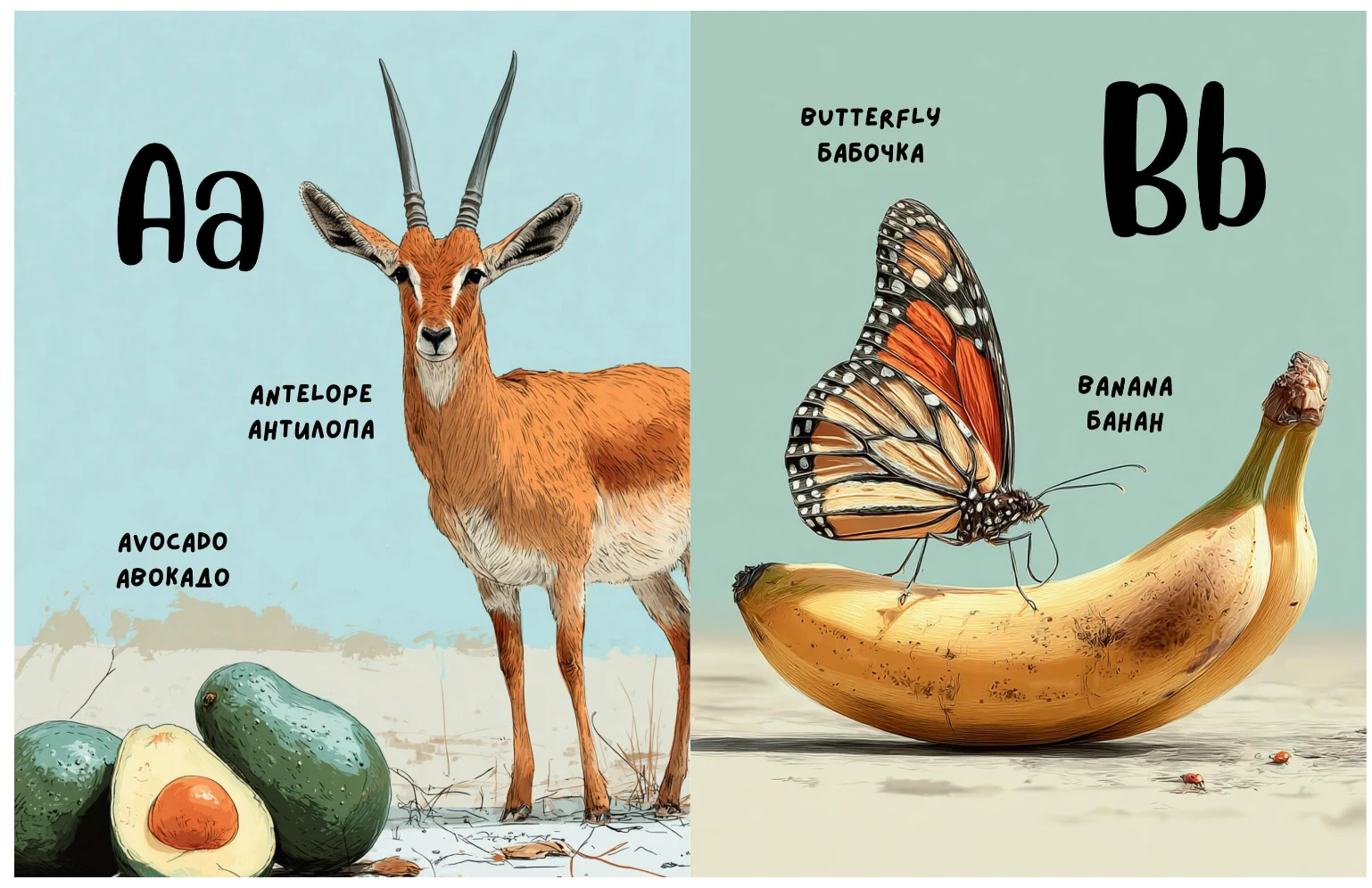
Start with a picture a child recognizes immediately: zebra — зебра, banana — банан, doctor — доктор, or avocado — авокадо. The meaning stays stable while the two words create a bridge between languages.
Name the picture naturally in English, pause, and then name it in Russian. Point to the opening letters without asking for perfect repetition. English and Russian letters do not always match, so one clear comparison is more useful than forcing a connection on every page.
Follow a four-step reading routine
Predictable steps help a young child focus on the picture and enjoy returning to the same page.
- Look at one picture and name it in both languages.
- Point to the opening letters and say the words once more.
- Ask the child to find, point to, or act out the object.
- Finish with an easy choice such as: “Zebra or banana?”
Teach the sound inside the word
A letter has a name, but it also represents sounds inside words. During early practice, the opening sound is often more concrete than an abstract letter name. Say the whole word first and then repeat it slightly more slowly without distorting it.
Invite the child to join in, but accept pointing, smiling, or choosing the correct picture as meaningful participation. If pronunciation is unclear, repeat the word correctly in your response instead of stopping the activity for a correction.
Bring the alphabet into everyday life
Look for familiar letters on cereal boxes, street signs, refrigerator magnets, clothing labels, and the child’s name. Ask a simple question such as “Can you find A?” and keep the moment playful.
Leave one or two word pairs visible for several days. Draw them, build the letters from blocks, or look for the objects around the house. Seeing a letter in different places makes it part of the child’s world instead of something that exists only during a lesson.
Give the Russian alphabet for bilingual kids its own context
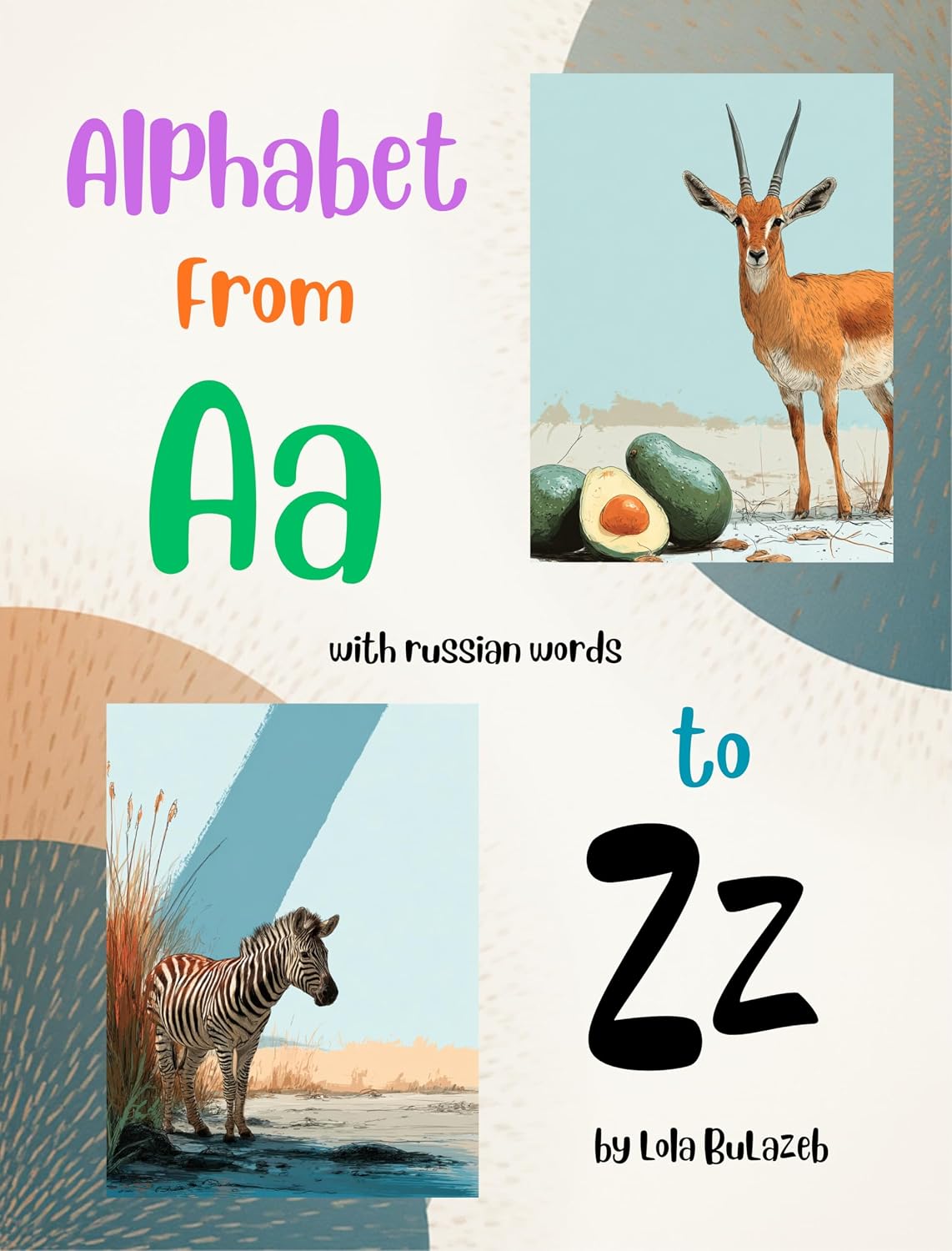
A Russian alphabet for kids contains 33 Cyrillic letters, while an English alphabet book follows A–Z. A bilingual picture book can introduce comparisons and Russian matching words, but children also benefit from Russian stories, songs, names, and later materials that show the full Cyrillic sequence.
When a Latin and Cyrillic letter look alike, say which language you are reading. When they look different but begin a useful word pair, focus on the picture and meaning. This honest distinction prevents a visual shortcut from becoming a confusing rule.
Let interest set the pace
Some children want the same page every day; others prefer movement, drawing, or searching games. Both approaches support learning. Move to a new letter while the current word still feels enjoyable, not only after a child can perform it on request.
Five to ten minutes, three to five times a week, is a practical starting point. Stop while the child is still interested. A warm five-minute ritual is more sustainable than an occasional long lesson.