Two alphabets · Look-alike letters
Cyrillic and Latin Look-Alike Letters for Kids
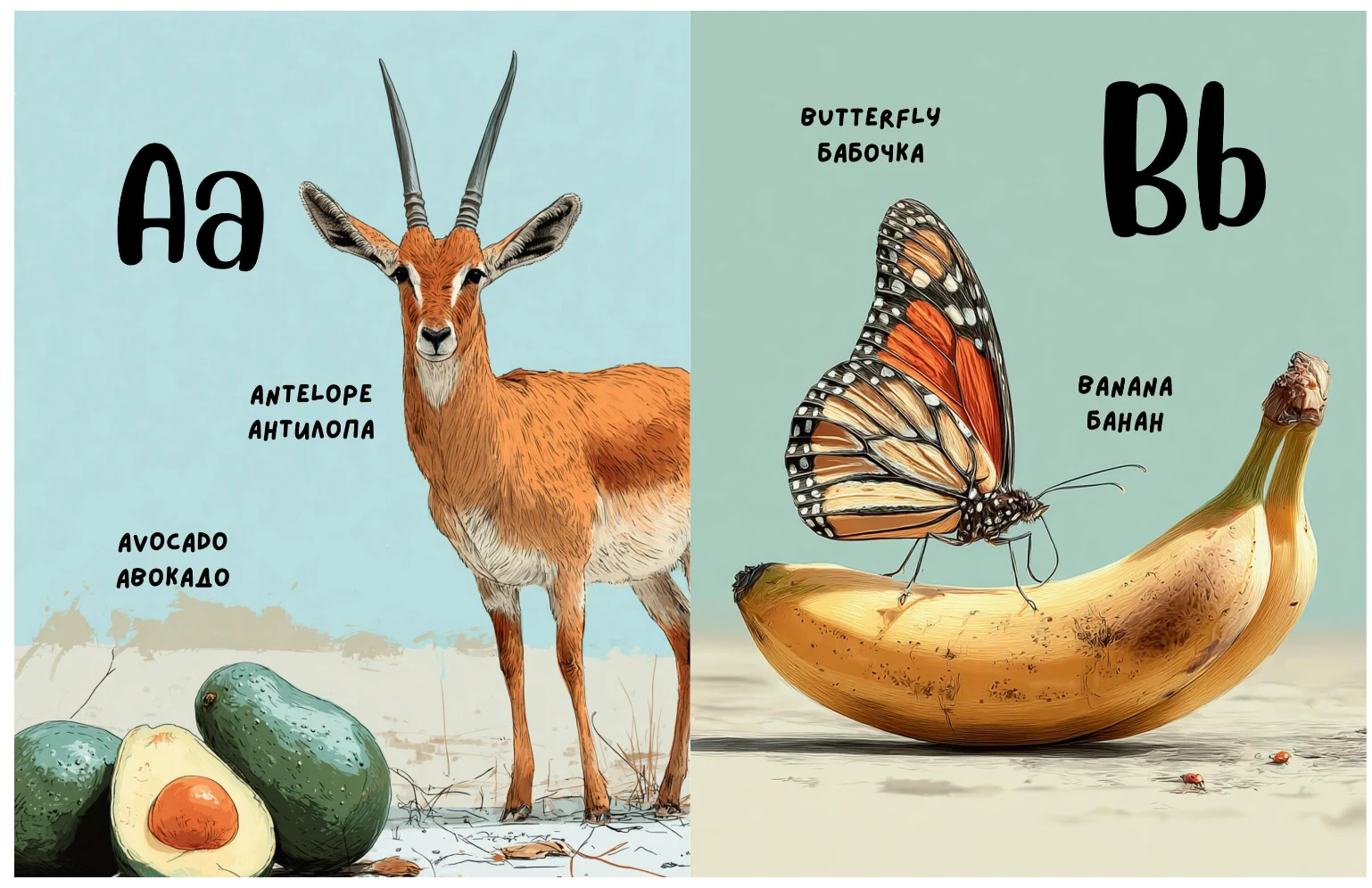
B and В, H and Н, P and Р look almost identical, but they can have different sounds. This is a natural source of confusion for a child learning the English and Russian alphabets. Short comparisons, familiar words, and pressure-free games make the two writing systems easier to notice.
Updated August 11, 2026 · 8 minute read
Why children mix up similar letters
The Latin and Cyrillic alphabets share several nearly identical shapes. A child sees a familiar outline and tries the sound that worked before. That is a sensible prediction, not laziness, carelessness, or a sign that two languages are too much.
Try a child-friendly explanation: some letters wear the same costume but use different voices. Name the alphabet first, then the sound and a familiar word: “This is English P, the p sound in pen. This is Russian Р, the r sound in рак.” One pair at a time is enough.
Start with letter friends: A/А, M/М, O/О, T/Т, K/К
Some capital letters can become useful anchors. A/А, M/М, O/О, T/Т, and K/К have similar shapes, and one of their common sounds in the two languages is close. The consonant pairs M/М, T/Т, and K/К are especially easy to demonstrate with simple words.
Do not promise that each pair always sounds exactly the same. English A and O represent several sounds, and letter names differ between the alphabets. Show lowercase forms too: m/м and t/т no longer look alike. Handwriting and typefaces can also change details in K/К and other letters.
- Place the capital letters together and look for the shared shape.
- Say one clear sound and a word in each language.
- Then compare the lowercase forms and notice what changes.
Meet five look-alikes that can use different voices
These pairs are common Cyrillic and Latin look-alike letters. Do not present the whole list as a test. Pick one or two pairs, add pictures, and meet them again in different games.
- B/В: Latin B commonly represents the b sound in ball; Cyrillic В represents the v sound in вода.
- H/Н: Latin H usually represents the light breath at the beginning of hat; Cyrillic Н represents the n sound in нос.
- P/Р: Latin P represents the p sound in pen; Cyrillic Р represents the r sound in рак.
- C/С: Latin C can sound like k in cat or s in city; Cyrillic С usually represents the s sound in сок.
- X/Х: Latin X often represents two sounds, k plus s, in box; Cyrillic Х represents the breathy kh sound at the beginning of хлеб (khleb).
Use one calm comparison routine
Put two cards side by side and ask, “Is this an English letter or a Russian letter?” Next, say its usual sound and connect it to a familiar picture word. This order teaches the child to notice the writing system, not only the shape.
Two or three pairs are plenty for one session. Begin with one clear printed font and a consistent color for each language. When the cards become familiar, add lowercase letters, a new typeface, or letters found on packages and signs.
- See the shape.
- Name the language: English or Russian.
- Say a common sound.
- Connect the letter to a familiar word and picture.
Play without fear or drilling
The goal is to notice a difference, not to answer faster than an adult. If the child guesses incorrectly, say, “They really do look alike. Let’s find out which voice this letter has today,” and look for a clue together.
- Letter passports: give English cards a blue border and Russian cards a red border, then sort them into two “countries.”
- Catch the grown-up: call Cyrillic Р an English P on purpose and invite the child to be the letter detective.
- Two mailboxes: post cards into English and Russian envelopes while naming one sound and picture word.
- One costume, two voices: build the shared shape from craft sticks, then change its “voice” when the language-color card changes.
- Letter hunt: look for one pair in a book, on packages, or on signs without asking the child to read every word.
Invite parents and grandparents to help
One adult can bring the English word and another the Russian word. A grandparent on a video call can show a Cyrillic card and say a Russian word while the child finds its Latin look-alike. The alphabet comparison then becomes part of family connection, not a separate worksheet.
Notice progress when the child pauses at a look-alike, asks which language it belongs to, or finds the matching picture. There is no need to wait for complete mastery of both alphabets. Five warm minutes several times a week are more useful than a long quiz that corrects every mistake.