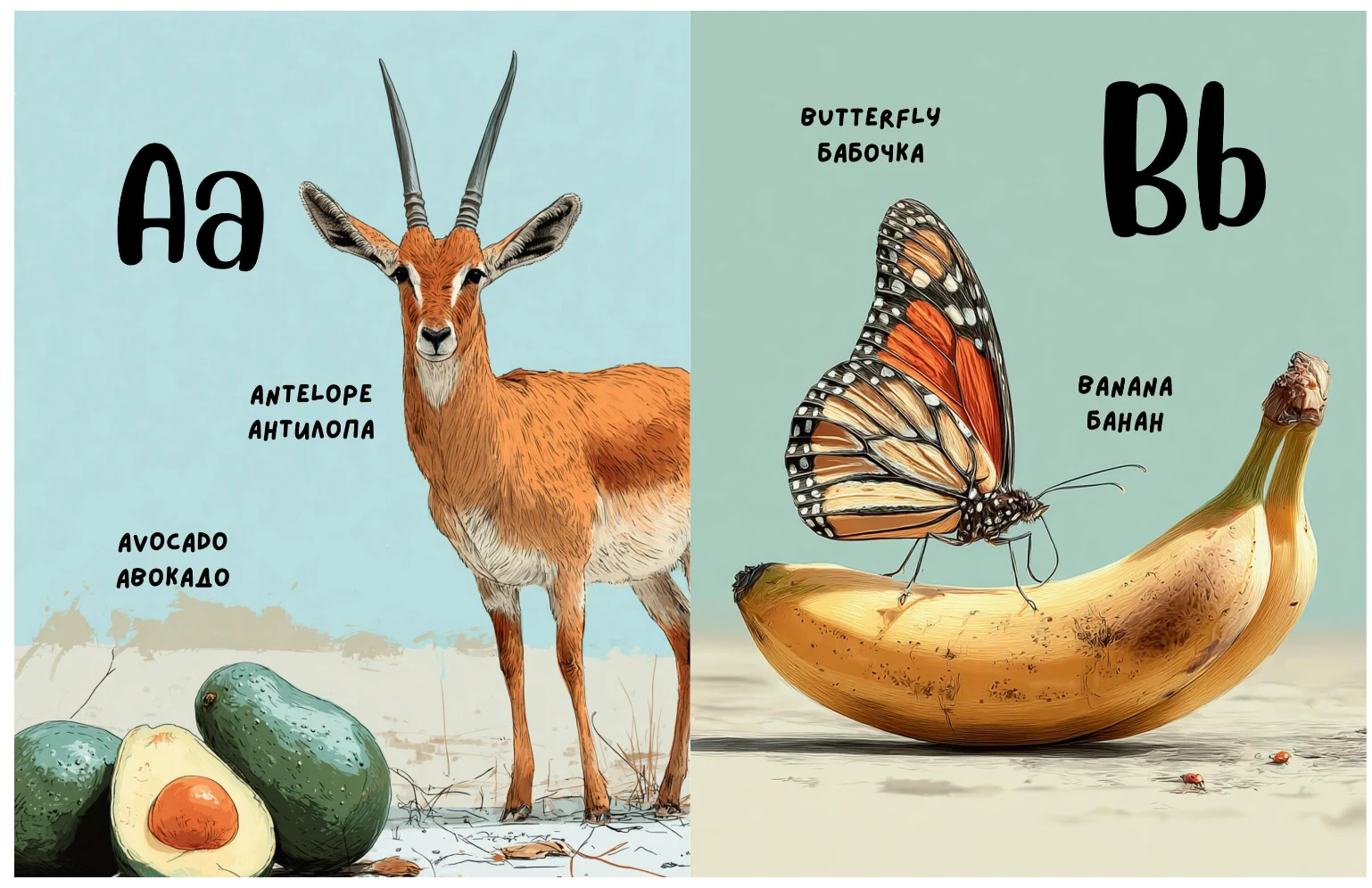
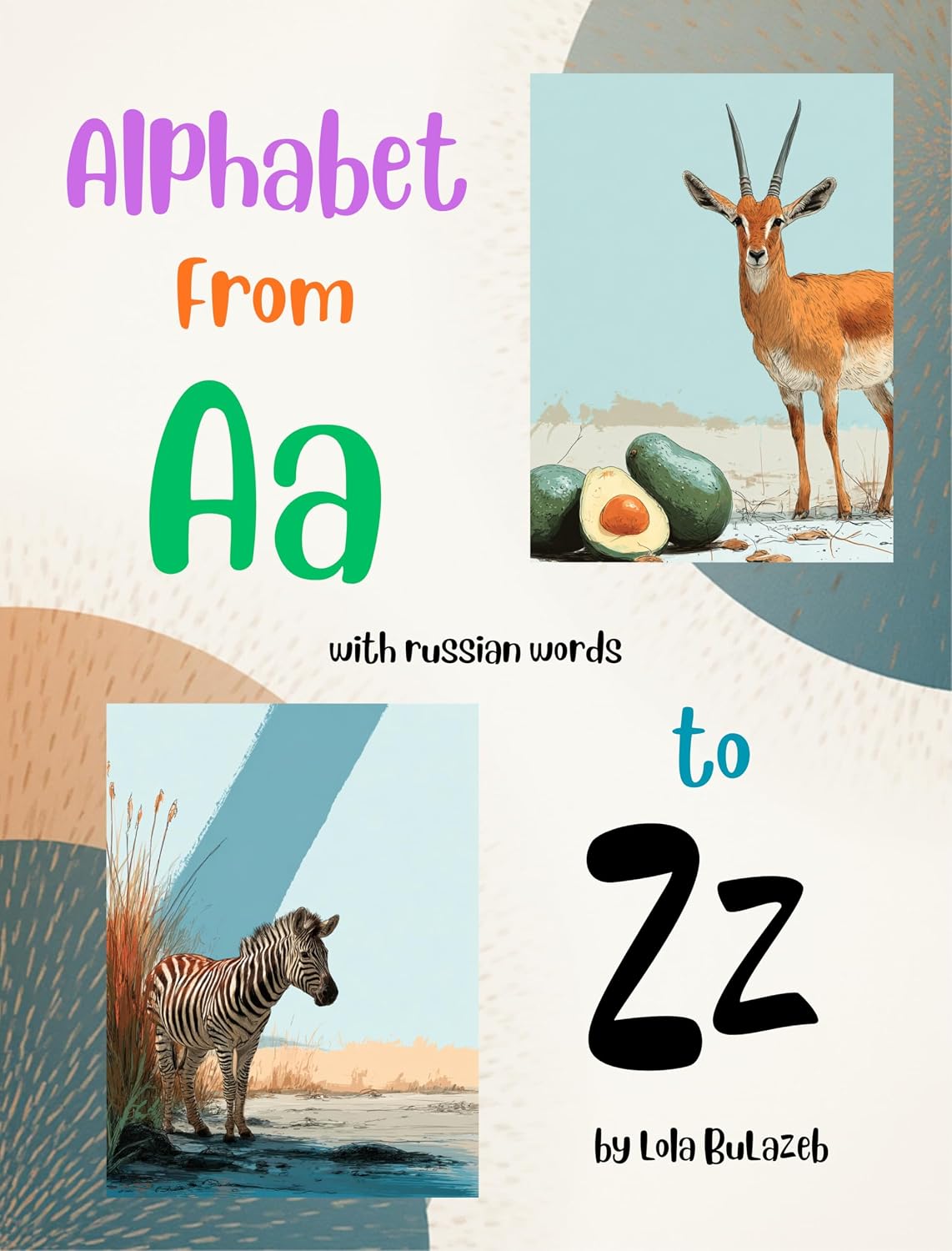
Russian alphabet · For English-speaking children ages 1–6
Russian alphabet for English-speaking kids: a gentle start
Cyrillic becomes easier when each letter is connected to a useful Russian word, a clear picture, movement, and a comparison with English. Start with a few meaningful letters and revisit them in short, playful moments.
Updated August 13, 2026 · 7 min read
Teach a letter inside a real Russian word
Say the whole Russian word while pointing to its picture, then draw attention to the opening sound and letter. A child needs the meaning first: Д becomes memorable when it belongs to дом (house), and К when it belongs to кот (cat).
Keep the letter name, its sound, and the word distinct. You might say: “This is the letter Д. In дом, it starts the word with /d/.” Hearing the letter in connected speech is more useful than repeating an isolated sound many times.
Begin with letters that matter to your child
Start with a letter from the child’s name, a relative’s name, or a favorite Russian word. Personal connections give a new writing system a purpose and make children more likely to notice the same letter again.
You do not need to move from А to Я in every session. Explore two or three interesting letters first, then introduce alphabetical order naturally through a book, song, or letter hunt.
Compare Cyrillic and Latin shapes carefully
Some uppercase letters are friendly visual anchors. А, К, М, О, and Т look familiar and often represent similar sounds in Russian and English. Let the child notice that connection rather than presenting Cyrillic as completely unknown.
Other familiar shapes are false friends. Russian В sounds like English V, Н like N, Р like R, С like S, and У is usually close to the vowel sound in “food.” Always name the language and place the letter in a whole word so the two systems stay clear.
Play with sound, shape, and movement
Change the activity while keeping a small set of letters familiar. Repetition then feels like discovery rather than a test.
- Find a Cyrillic letter on a book cover or food package.
- Build a large letter from blocks, craft sticks, or play dough.
- Trace a letter in the air while saying a Russian word.
- Hide one of three letter cards and guess which disappeared.
- Match a picture to the first letter of its Russian name.
- Sort visual friends and false friends from the two alphabets.
Use a five-to-ten-minute routine
Look at one or two pictures, say the Russian words, notice their first letters, and finish with a quick search or movement game. End by returning to the child’s favorite picture and let them choose what to revisit next time.
Stop while the activity is still pleasant. A short, successful meeting with Cyrillic is more valuable than completing a worksheet after attention has gone.
Keep Russian connected to people and everyday life
Letters are easier to remember when Russian is also used for affection, play, stories, meals, or conversations with relatives. Ask grandparents to send a short voice message with one of the week’s words, or look for the letter in a familiar family name.
If you are learning Russian alongside your child, choose a small word set and check pronunciation with a trusted audio dictionary or fluent speaker. Warm, regular interaction matters more than presenting many letters at once.