Russian–English word bridges · Family guide
Russian–English Words That Sound Alike for Kids
Words such as zebra — зебра and doctor — доктор give a child one familiar meaning to hold onto while exploring two languages. The words are similar, not always identical, which makes them useful starting points for picture talk, listening, and letter play.
Updated August 11, 2026 · 7 minute read
What is a Russian–English word bridge?
A word bridge is a family-friendly learning term for two words that share a meaning and are similar enough in sound or spelling for a child to notice the connection. The familiar concept reduces the amount of new information: the child already understands the picture and can focus on how each language names it.
Families often search for these pairs as Russian–English cognates for kids or words that sound alike. Not every useful pair is a strict linguistic cognate, and the two pronunciations do not have to match exactly. For early learning, the practical connection between picture, meaning, and words is what matters.
Eight word bridges from the book
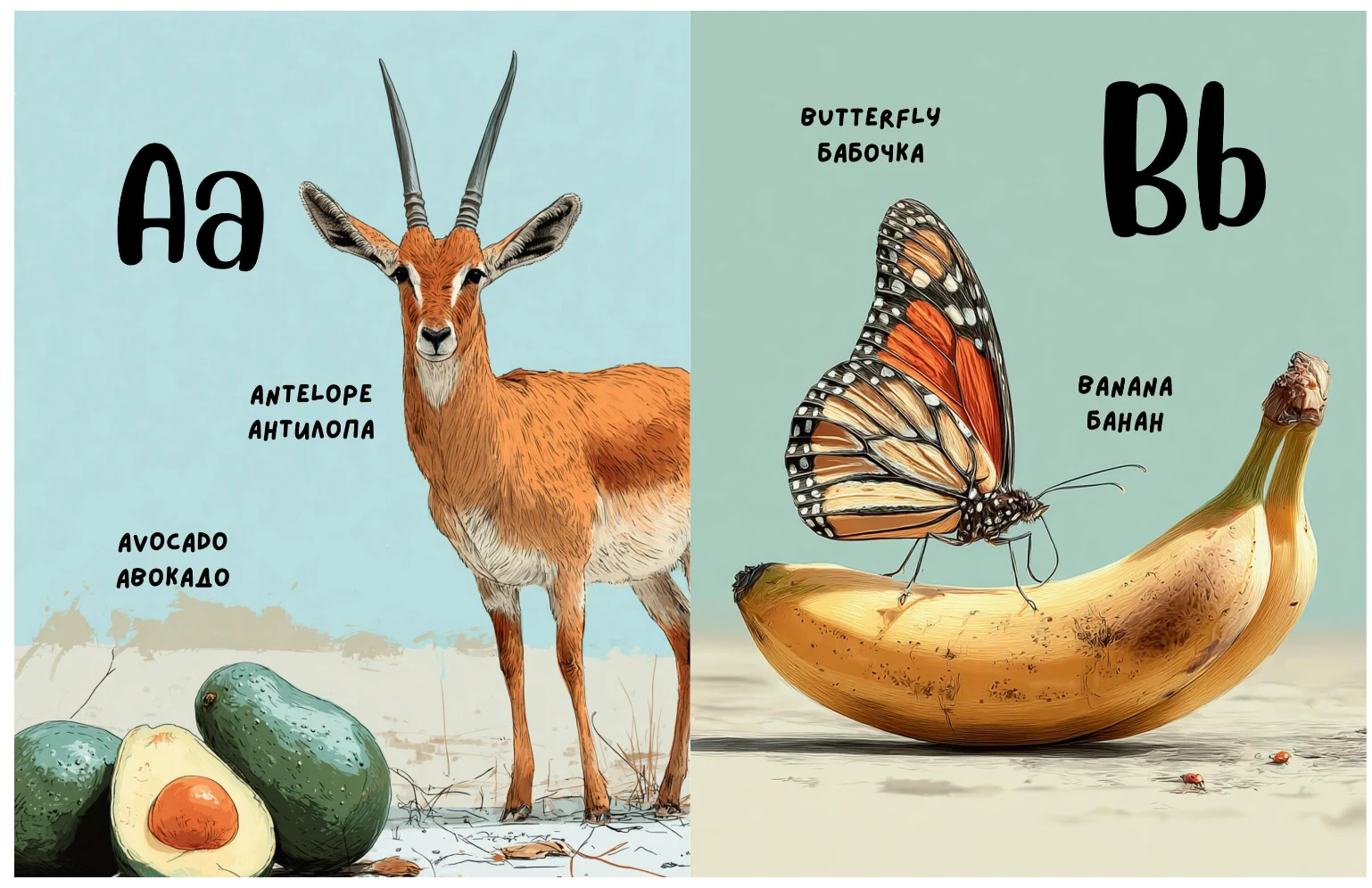
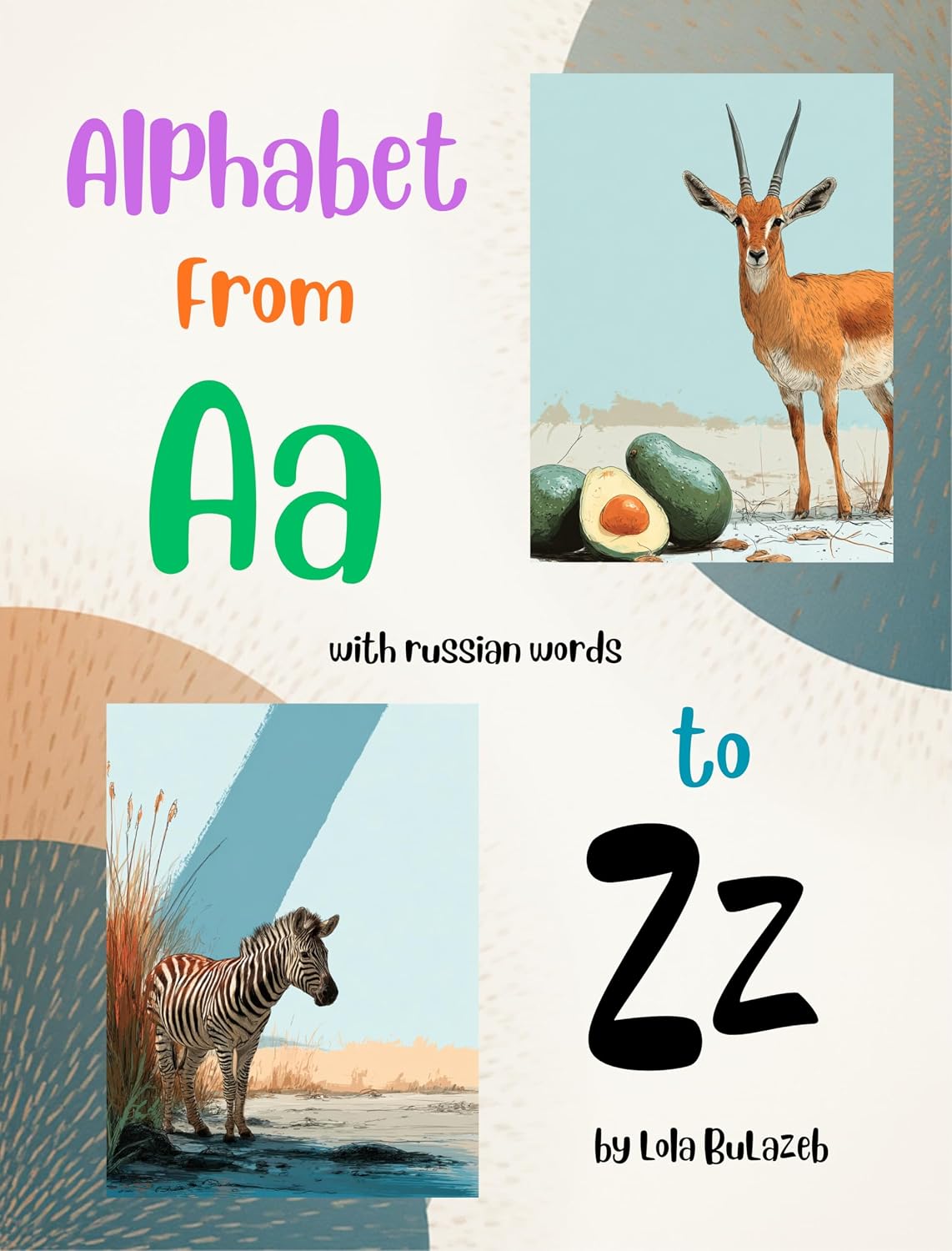
Begin with concrete things a child can point to, imitate, or find in daily life. These eight pairs appear in From A to Z and can be revisited in snacks, pretend play, drawing, and conversations.
- antelope — антилопа
- avocado — авокадо
- banana — банан
- cactus — кактус
- coffee — кофе
- doctor — доктор
- dinosaur — динозавр
- zebra — зебра
Say each word naturally—not as an exact copy
Place the two words next to each other, but pronounce each one naturally. Banana — банан and zebra — зебра are easy to connect by meaning and overall shape, yet their endings, stress, or individual sounds are not identical. That difference is useful listening practice, not a mistake to erase.
Say the English word, pause, and then say the Russian word at a normal pace. Invite the child to point or choose before asking for speech. If the child blends the versions, respond with the word you want to model in a short, warm sentence rather than interrupting the game for repeated correction.
Try a five-minute picture-and-word game
Use two or three pairs at a time. A predictable routine creates enough repetition for learning while keeping the activity light for toddlers and preschoolers.
- Look: let the child choose one picture.
- Name: say the word once in English and once in Russian.
- Notice: ask what sounds or parts of the words seem similar.
- Move: act like a dinosaur, point like a doctor, or pretend to peel a banana.
- Recall: hide the picture and offer a choice between two words.
- Finish: repeat the child’s favorite pair and stop while the game is still fun.
Move from a shared meaning to two writing systems
Show the whole words before isolating the first letters. Antelope — антилопа and avocado — авокадо begin with A and А, while cactus — кактус and coffee — кофе connect the English C sound in these words with Russian К. Doctor — доктор and dinosaur — динозавр offer another clear sound bridge even though D and Д have different shapes.
Name the language and point to each written form: “English C; Russian К.” This helps a child compare Latin and Cyrillic without assuming that letters with similar jobs must look alike—or that look-alike letters always behave the same way. One comparison per reading is enough.
Turn word bridges into family memories
Parents can take turns naming the same picture in English and Russian. Grandparents can choose a word, tell a short memory about a doctor, cactus, or favorite banana snack, and ask the child to find the matching illustration. A meaningful story makes the vocabulary easier to revisit than a disconnected list.
The same activity works on a video call: send or show one page in advance, let the child point to a picture, and invite the relative to use the Russian word in a natural question. The goal is not a vocabulary test; it is another reason for two generations to talk together.