Matching first letters · Picture-word guide
Russian and English Words That Start with the Same Letter for Kids
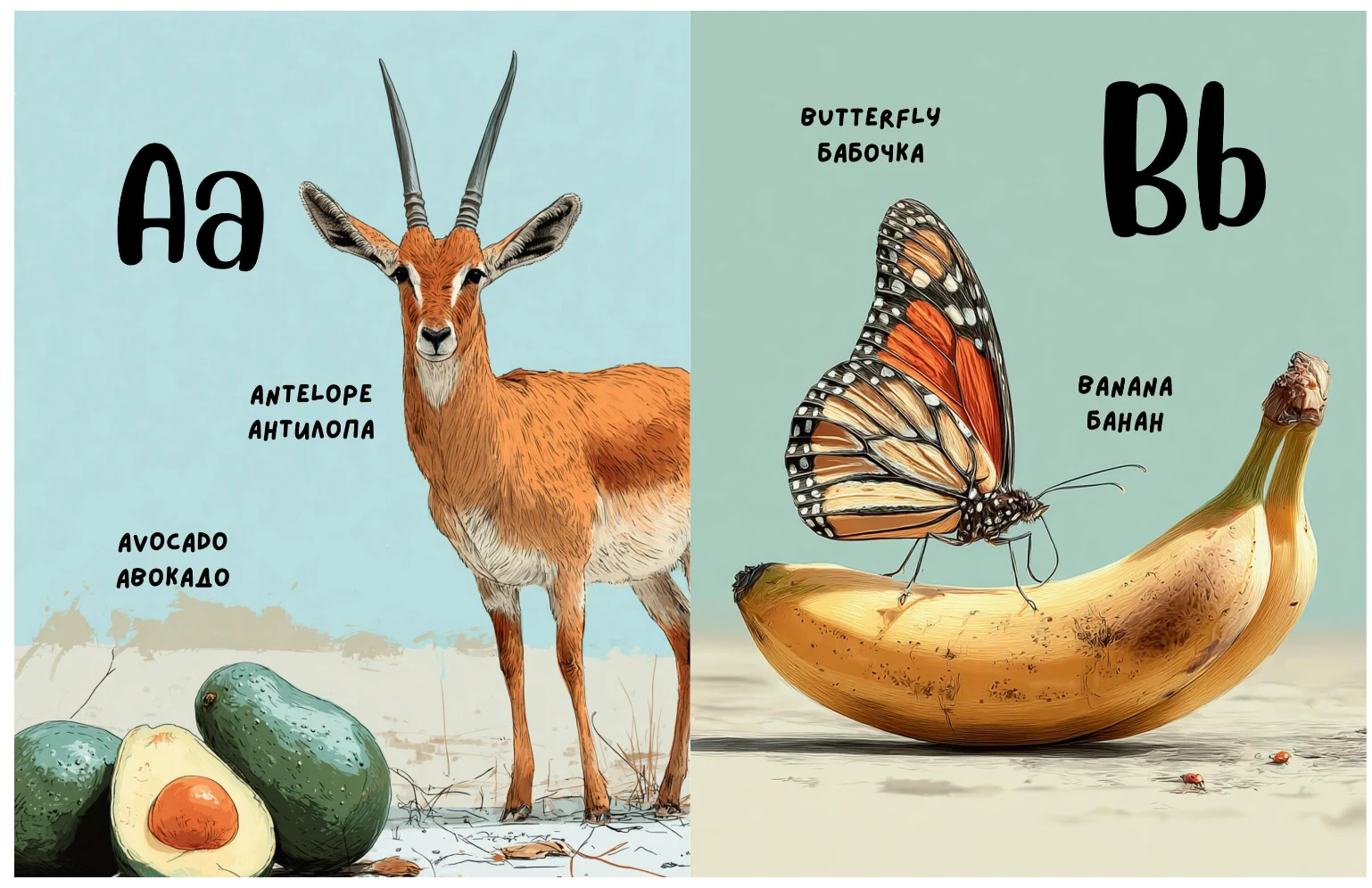
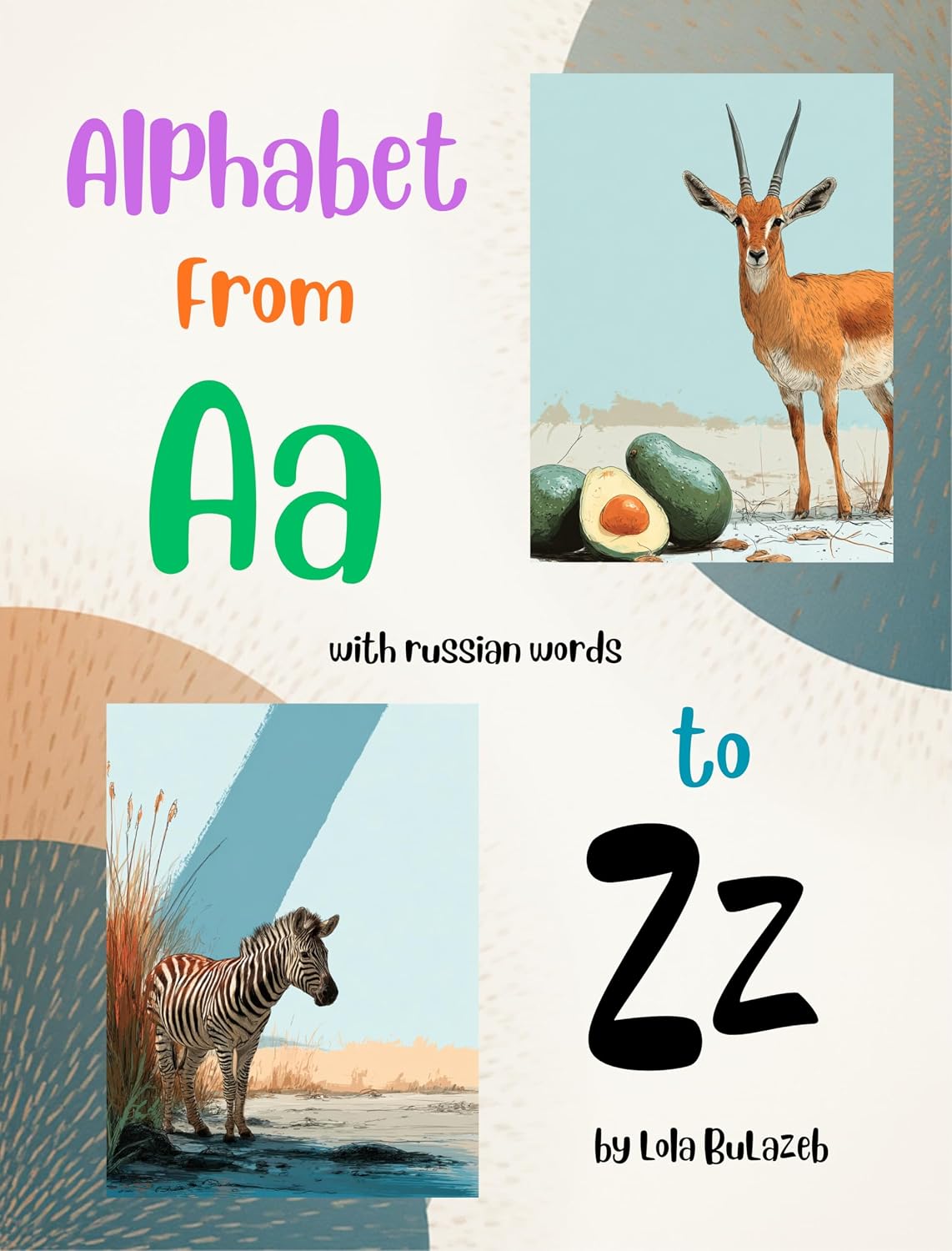
Can an English word and its Russian translation begin with “the same letter”? They can often be paired through corresponding first letters or close opening sounds: banana — банан, doctor — доктор, and zebra — зебра. In From A to Z, one familiar picture connects the two words while Latin and Cyrillic remain clearly separate writing systems.
Updated August 11, 2026 · 7 minute read
What “the same letter” means across two alphabets
Families often use “words that start with the same letter” to describe an English word and its Russian translation that begin with corresponding letters or close opening sounds. The written characters do not have to be identical. Banana begins with Latin B, while банан begins with Cyrillic Б: the shapes differ, but the words have a similar opening sound.
Every comparison is specific to the word pair. The C in cactus begins with the /k/ sound and creates a bridge to К in кактус, but English C can represent other sounds too. Say the whole words first, then name each language and point to its opening letter.
Ten examples from From A to Z
Each pair keeps one picture and meaning stable while the two labels help a child notice the beginnings of the English and Russian words. These ten examples come from the book and show its central matching-word method.
- A/А: antelope — антилопа
- A/А: avocado — авокадо
- B/Б: butterfly — бабочка
- B/Б: banana — банан
- C/К: cactus — кактус
- C/К: cat — кот
- C/К: coffee — кофе
- D/Д: doctor — доктор
- D/Д: dinosaur — динозавр
- Z/З: zebra — зебра
Compare a letter’s shape with its job in the word
Printed A and А look alike, but one belongs to the Latin alphabet and the other to Cyrillic. Say “English A” and “Russian А” aloud. A child can notice the shared shape without treating the two writing systems as one.
B/Б, D/Д, and Z/З have different shapes but form useful opening-sound bridges in these examples. C/К is especially helpful: the letters look different, yet cactus — кактус, cat — кот, and coffee — кофе begin with a close sound. This is an observation about these words, not a rule that English C always equals Russian К.
Pronounce each word naturally
Close opening sounds are not necessarily phonetically identical. Stress, vowels, endings, and other sounds differ in antelope — антилопа, dinosaur — динозавр, and zebra — зебра. Model each word naturally in its own language instead of reshaping one pronunciation to match the other.
Say the English word, pause, and then say the Russian word. Invite the child to point to the picture or listen for the opening sound. If the child blends the two versions, model the word in a warm sentence rather than interrupting the activity for repeated correction.
Try a five-minute first-letter game
Two or three pairs are enough for one game. A short routine is easier to repeat in family life than a long alphabet lesson.
- Choose two pictures, such as banana — банан and doctor — доктор.
- Name each picture once in English and once in Russian.
- Ask which sound the child hears at the beginning of each word.
- Show both opening letters and name the language of each one.
- Mix the pictures and invite the child to find one by its first letter or sound.
- Finish with the favorite pair while the child still wants to play.
Carry word bridges into family life
Parents can take turns naming one picture in the two languages. A grandparent on a video call can choose the Russian word, tell a short story, and invite the child to find its English label. The first letter becomes the beginning of a conversation rather than a memory test.
Matching pairs introduce vocabulary, opening sounds, and the idea of two writing systems, but they do not replace learning the full 33-letter Russian alphabet and English A–Z. Use them as an accessible first bridge, then add Russian stories, songs, names, and separate practice with each alphabet.