Two alphabets · A parent’s guide
Which Alphabet Should a Bilingual Child Learn First?
There is no universal rule that every Russian–English bilingual child must learn one alphabet completely before seeing the other. A better starting point is the child’s daily language, interest, and reason for reading.
Updated August 11, 2026 · 7 min read
The short answer: begin with meaning, not a race
A child can notice English Latin letters and Russian Cyrillic letters during the same stage of childhood. The goal is not to make both alphabets progress at exactly the same speed. It is to give each writing system a clear, useful place in family life.
If English surrounds the child at preschool or school, Russian may need a small protected routine at home. If Russian is the stronger home language, familiar Russian words can help explain a new English word. Neither choice means that one language matters more.
Choose the first focus from the child’s real life
Start with the alphabet that gives the child an immediate reason to look: letters in their name, a message from a grandparent, a favorite English sign, or the title of a Russian story. Motivation is usually more useful than an abstract rule about which language should come first.
For a toddler, this may simply mean pointing to one letter beside a picture. A preschooler may enjoy finding the same letter on another page. An older beginner may want to compare how one familiar idea is written in two languages.
- Use letters from the child’s name and family names.
- Choose words connected to favorite animals, foods, or activities.
- Let grandparents contribute a Russian word or tiny story.
- Follow school interest in English without making home Russian feel like homework.
It is possible to introduce both alphabets together
Introducing two alphabets does not require two formal lessons. One picture can lead to an English word, a Russian word, and a quick look at their first letters. Keep the comparison brief and return to the meaning of the word.
Use clear language such as “This is English C” and “This is Russian С.” When two shapes look alike but represent different sounds, name the language instead of saying that the child is wrong. Repeated context helps the two systems separate over time.
Build a weekly rhythm instead of testing mastery
A simple rhythm might include English alphabet play on school days and Russian picture-book reading with family in the evening or on weekends. Another family may alternate the language used for a five-minute alphabet activity. Consistency matters more than perfect balance.
Keep a few familiar pages in rotation. When the child points, predicts a word, notices a letter, or asks to read again, treat that as progress. Avoid asking for a performance whenever a relative calls.
Expect some mixing and respond calmly
Latin and Cyrillic contain shapes that look identical or nearly identical. Some share a similar sound, while others do not. Temporary mixing is an understandable response to two visual systems, not a reason to stop using one of them.
Place the letters inside whole words and pictures, say which language you are reading, and model the expected sound. Short, friendly correction gives more context than drilling an isolated symbol many times.
Know when an alphabet book is the right next step
An alphabet picture book supports letter recognition, vocabulary, conversation, and curiosity. It is not the same as a full reading program that teaches blending sounds into syllables and words. Families can use both kinds of resources at different stages.
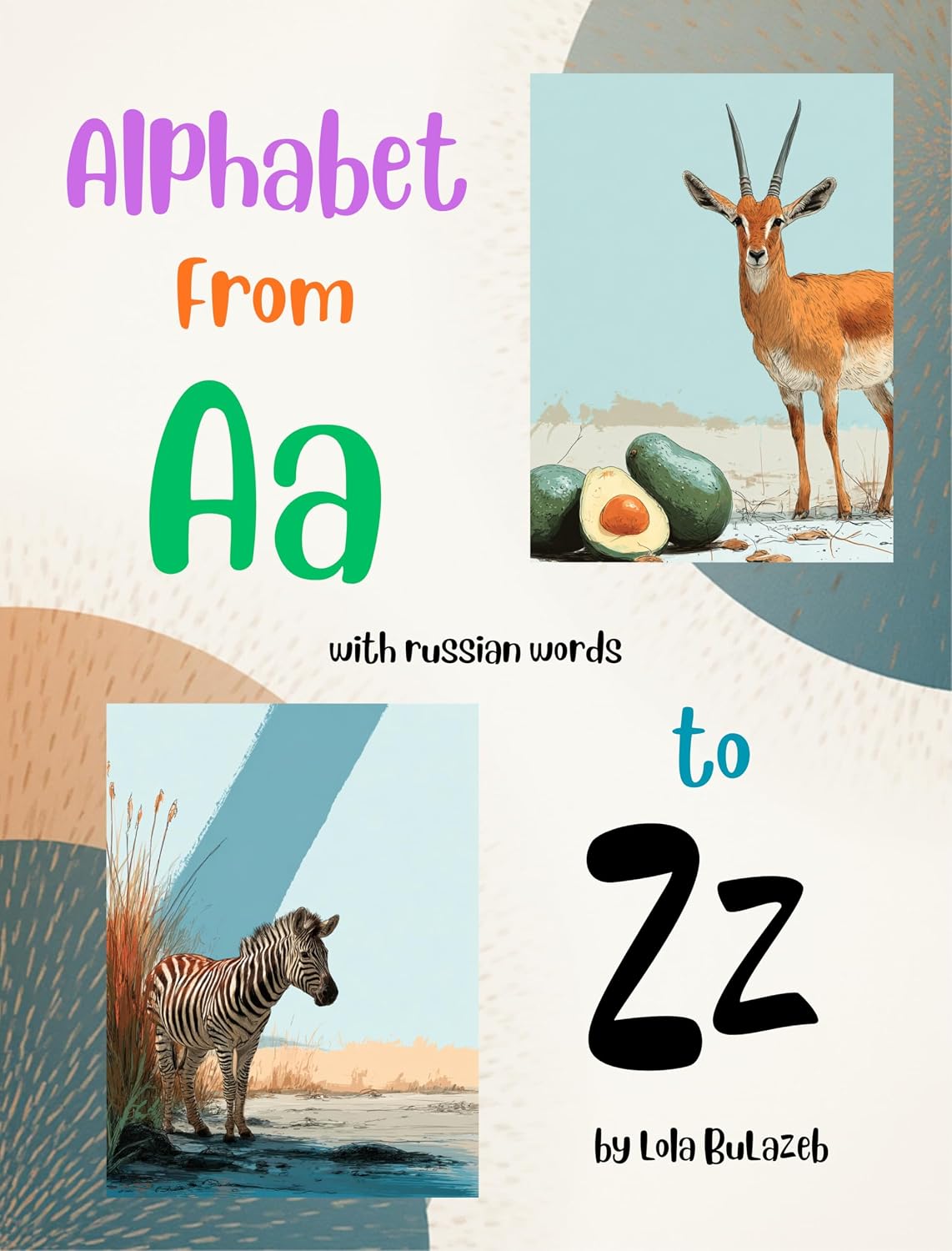
From A to Z is an English A–Z picture book with Russian matching words. It works as a visual bridge between languages and can sit alongside Russian stories, songs, handwriting play, and later Cyrillic reading instruction.